Every Black Cable Is Not Your Friend: A Grown-Up’s Guide to Toy Charging in 2026
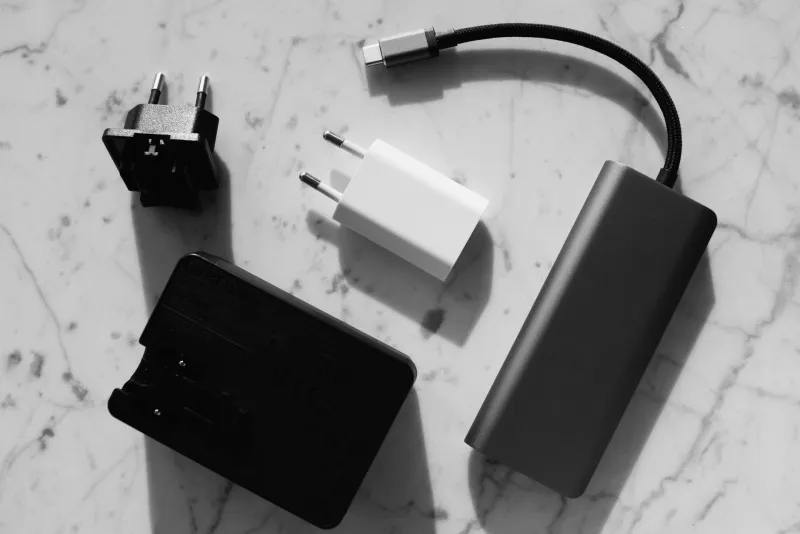
Every toy owner has one: a drawer that smells faintly of rubber and regret, full of black cables that may or may not belong to anything. You dig through it at 11 p.m., find a magnetic puck that fits nothing, and promise yourself you will sort it out later. Later never comes. The toy stays in the drawer, and the drawer becomes a junk pile with commitment issues.
Charging is the least sexy part of owning toys, which is exactly why it fails. Motors are fine. Materials are fine. Then a cable goes missing, a contact corrodes, and a perfectly good toy gets benched because nobody wrote down which charger it needs. This is not a moral failing. It is a systems problem. And it is fixable.
The Drawer Is Not a Spare Parts Bin
Start by dumping the whole thing onto a table. Yes, all of it. You are looking for three piles: chargers you can identify, chargers you cannot identify, and cables that are visibly damaged. The last pile goes in the trash immediately. Frayed insulation, bent connectors, exposed wire, or a plug that wiggles like a loose tooth are not worth the risk. A $12 replacement cable is cheaper than a fried toy or a scary smell near your nightstand.
For the mystery pile, do not guess. A cable that fits is not the same as a cable that is correct. Set the unknowns aside in a bag labeled “unknown” and only reintroduce them when you can match them to a specific toy and voltage. If you cannot identify a charger within a month, recycle it. Keeping a drawer of maybes is how you end up plugging a 12-volt adapter into a 5-volt toy and wondering why the motor sounds like it is coughing.
Proprietary Magnetic Chargers: Cute Until You Lose the Puck
Magnetic charging pucks are convenient, sealed, and deeply annoying when they disappear. The problem is that they are not standardized. A two-pin magnetic connector from one brand may look almost identical to another brand’s connector, but the pin spacing, polarity, and voltage can be different. Snapping one onto the wrong toy is not a harmless experiment. At best it does nothing. At worst it shorts the contacts or damages the charging circuit.
Treat every magnetic charger like a house key: label it, store it with its toy, and buy a spare from the manufacturer while the toy is still in production. Third-party magnetic chargers are a gamble unless the listing explicitly matches the voltage, current, and connector polarity. Also keep the contacts clean. Magnetic contacts attract tiny metal debris, and a bridge of grit across the pins can cause a short. Wipe the puck and the toy’s contact points with a dry cloth, and never charge on a metal surface where loose screws or paper clips can jump aboard.
USB-C Is a Connector, Not a Promise
USB-C has trained us to believe that one cable should charge everything. In the real world, USB-C is a shape, not a guarantee. Some toys use USB-C but only accept a slow trickle of power. Some will charge from a laptop port but not from a fast-charging wall block. Some USB-C-to-USB-C cables will not work with a particular toy because the toy’s charging circuit is basic and does not negotiate power the way a phone does.
The safest move is boring: use the cable that came with the toy, or a plain USB-A-to-USB-C cable plugged into a basic 5-volt charger. If the manual says 5V/1A, do not assume a 65-watt laptop charger is an upgrade. The toy will take what it needs only if it is designed to regulate properly. Cheap electronics sometimes are not. When in doubt, go smaller and slower.
Voltage, Current, and the Fast-Charger Trap
Voltage must match. If the toy says 5V, give it 5V. If it says 9V, do not improvise with a 5V charger and hope for the best. Current is a little more forgiving in theory, because a device should draw only what it needs, but that theory depends on the device being well-built. A toy that expects 500mA may not enjoy being attached to a charger that pushes more without proper negotiation.
Barrel plugs add another wrinkle: polarity. The center pin can be positive or negative, and getting it wrong can kill the toy. If you are using a universal adapter, check the polarity diagram on both the toy and the adapter. If you cannot find the diagram, do not use the adapter. This is not the place for confident improvisation.
Build a Labeling System That Survives Real Life
You do not need a label maker, but you do need a system. A strip of masking tape and a Sharpie works fine. Write the toy name and the voltage on the charger. For magnetic pucks, write the toy name on the back of the puck. For cables, use a small tag or a colored zip tie that matches a tag on the toy. Store each charger with its toy when possible, but not in a damp bathroom cabinet. Moisture and electronics are not friends.
A phone photo of the charger and the toy together is also useful. When the label fades, the photo does not. Keep a running note on your phone with the charging specs for each toy. It takes five minutes and saves you from another late-night compatibility panic.
Travel Without Packing the Whole Drawer
When you travel, pack only the chargers for the toys you are bringing. Put them in a small labeled pouch, not loose in a toiletry bag where they can get wet or tangled. Do not rely on hotel USB ports, which can be underpowered, switched off, or weirdly wired. Bring a basic wall charger and the exact cables you need. If you are flying, keep the charging pouch in your carry-on so it does not get baked or frozen in checked luggage.
When to Retire a Charger
A charger is done when it gets hot, smells like burned plastic, has a loose connector, or only works at a certain angle. Do not tape it. Do not bend the plug back into place. Do not keep it as a backup. Retire it. The same goes for magnetic contacts that are corroded or pitted. Charging gear is cheap compared with replacing a toy, and it is certainly cheaper than dealing with a electrical scare in your bedroom.
The Bottom Line
Toy charging is not glamorous, but it is part of materials safety. The drawer is not a spare parts bin. Every black cable is not your friend. Match the charger to the toy, label it, store it dry, and stop treating USB-C like a universal pass. Your toys will last longer, your drawer will be less haunted, and you will stop buying replacements for things that were never broken in the first place.